Category

News Releases

NCDA Public Opinion Survey Results: Electric Vehicles

A variety of surveys in various jurisdictions have shown there are a number of valid reasons that consumers are still reluctant to buy EVs. As the Association representing new car dealers across the province, the New Car Dealers Association of BC (NCDA) conducted independent research during the month of August involving 500 drivers, province-wide – to get a snapshot of opinions on the issue of EVs and factors may motivate or hinder greater adoption of clean energy vehicles.

The findings include the following:

  • Most British Columbians (57%) drive their own vehicle “five to seven times a week”, while 17% drive their own vehicle “three or four times a week”.
  • Only 12% of British Columbians drive their own vehicle “once or twice a week”, and 14% say they never drive their own vehicle.
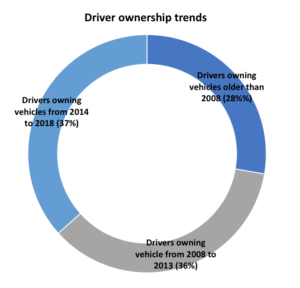
  • Almost three-in-ten drivers (28%) have a vehicle that is older than 2008, while 36% have a vehicle from 2008 to 2013.
  • More than a third of drivers (37%) have a vehicle from 2014 to 2018.
  • Half of drivers (50%) report a commute of “less than 20 minutes”, while one third (34%) say their commute lasts “21 to 40 minutes.”
  • Only 5% of drivers have commutes that are longer than 60 minutes.
  • Almost three-in-five drivers (57%) never use public transit or a bike to get to school or other activities.
  • One-in-five (22%) rely on something other than their vehicle “once or twice a week”, including 29% of those in Metro Vancouver.
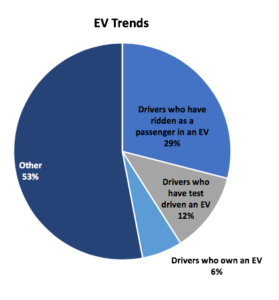
  • 6% of drivers report that their primary vehicle is electric, a proportion that jumps to 15% among those aged 18-to-34
  • Three-in-ten drivers (29%) have ridden as a passenger in an electric vehicle (EV), and 12% have test driven an electric vehicle (EV).

  • More than three-in-five drivers (63%) say they have “definitely” (27%) or “probably” (36%) thought about purchasing an electric vehicle.
  • More than nine-in-ten drivers of electric vehicles (92%) are satisfied with their choice (recognizing the small sample size – 9% of 500 individuals who responded to survey questions).
  • Two-in-five drivers (40%) are “definitely” or “probably” considering purchasing a new vehicle in the next 12 months.

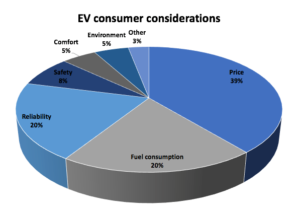
  • Price (39%) is the most important consideration, followed by fuel consumption (20%), reliability (also 20%), safety (8%), comfort (5%) and the environment (also 5%).
  • At least two-in-five drivers say there are four significant barriers to purchasing an electric vehicle: Not having enough places to charge the vehicle in the areas where they usually drive (46%), too expensive compared to nonelectric vehicles (44%), fear of becoming stranded if you can’t find a charging station (42%) and not having a place to charge the vehicle where they currently live (such as a strata) (41%).
  • Most British Columbians (56%) are aware of the electric vehicle purchase incentives, but more than two-in-five (44%) are not.
  • Women (53%), those aged 18-to-34 (50%) and those in Northern BC (60%) are more likely to be unaware of the incentives.
  • Seven-in-ten drivers (70%) say they “definitely” or “probably” would be more likely to purchase an EV after learning of the “Clean Energy Vehicles for British Columbia” program—a point of sale Incentive program with a potential rebate of up to $5,000.
  • Three-in-five drivers (62%) say they “definitely” or “probably” would be more likely to purchase an EV after learning of the BC SCRAP-IT Electric Vehicle Program— which provides financial incentive for early retirement of old vehicles that are replaced with lower emitting options, with a potential Rebate of up to $6,000

The results of our survey, while not definitive, certainly underline there are a number of factors that may influence new car buying – including current point of purchase incentive programs.

To that end, the NCDA remains a strong advocate of the current approach that is based on incentives and education – and will be reaffirming that position with the provincial government because further adoption of clean energy vehicles is good for the economy, the environment and current and future British Columbians. We will continue to push back on any efforts to implement a ZEV mandate to force OEMs to achieve arbitrary sales targets in the province.

Submission to the BC Government Clean Growth Discussion

Hon. George Heyman
Minister of Environment and Climate Change Strategy
P.O. Box 9486, Stn Prov Govt
Victoria, B.C.
V8W 9W6

Via Email: [email protected]

Sent August 24, 2018

Dear Minister Heyman,

Re: Submission to BC Government Clean Growth Discussion: Transportation

On behalf the New Car of Dealers Association of BC (NCDA), representing over 390 new car and truck franchised dealers, doing business in over 55 communities throughout the province, we appreciate the opportunity to provide our input on the BC Government’s Clean Growth BC Transportation Intention Paper and Plan.

The global automotive industry is undergoing a massive transformation. Global vehicle manufacturers are investing hundreds of billions of dollars in new clean energy vehicle technology. Here in BC, we have developed our own successful model for transforming the automotive industry directly by working closely with all levels of government, and more importantly, with British Columbians.

BC’s New Car Dealers have long been at the forefront of this transformation, moving BC consumers towards more environmental choices and it is part of the reason why British Columbia is known around the world for being an environmentally progressive province.

Indeed, being “green” is a compliment in these parts. Dealerships in our industry take this responsibility very seriously and it’s a transformation that is very evident. For example, Auto West BMW in Richmond recently invested more than $2 Million into green business practices and environmental technologies, distinguishing themselves as the most sustainable BMW facility in the world. With the installation of 168 rooftop solar panels, it is considered the largest solar panel installation on a dealership anywhere in Canada.

BC’s New Car Dealers are committed to reducing their environmental footprint through the introduction of the latest technology. They’re doing this to reduce waste and cost but also because consumers are looking for dealers who are proactively environmentally conscience.

Through the CEVforBC™ Program, the NCDA has created competition between dealerships across BC to determine who can reach the highest level of sales of clean energy vehicles, across all brands. Recipients of the prestigious CEVforBC™ Green Star Dealer Awards® are honoured at the annual Vancouver International Auto Show for their exceptional commitment and pivotal role they play in creating a green economy.

Eight different dealerships have been recognized in 2015, 2016 and 2017 for top Clean Energy Vehicles sold, including: Battery Electric Vehicle Sales (BEVs) and Plug-in Electric Hybrid Sales (PHEVs).

New car dealers play a pivotal role in reducing our share of the percentage of B.C.’s greenhouse gases (14%) that directly come from new light duty vehicle sales and the on-road light duty vehicle fleet. On a number of levels over the last decade, the auto industry in BC has been at the forefront of the climate change agenda by:

  • Creating and implementing environmental stewardship programs to recycle tires, oil, batteries and vehicles;
  • Selling a greater number of highly fuel efficient, alternative fuel and clean energy vehicles;
  • Promoting our 5 Steps to Carbon Neutral Program to BC Consumers;
  • Educating dealers and consumers around clean energy vehicles through newspaper columns and other media around the province, the annual Vancouver International Auto Show (attended by over 120,000 people) with amongst the largest electric vehicle ride and drive event in North America (47% growth over the past three years) and other activities around BC;
  • Promoting the CEVforBCTM program, as a means of educating and ultimately encourage consumers to purchase clean energy vehicles.

    These steps are just a few of the many ways we are demonstrating the degree to which BC’s New Car Dealers and the auto industry are committed to reducing BC’s carbon footprint.

    New vehicle fuel economy and GHG emissions are already regulated federally and this is driving hundreds of billions of dollars of new vehicle technology investment to significantly reduce GHGs. It’s working.

    Here in BC, the New Car Dealers, through their Association, have been honoured to be a partner with the BC Government in administering the leading Clean Energy Vehicle program in Canada, and perhaps in North America.

    Recent reports from FleetCarma show that BC leads the country in per capita EV adoption at 3.7%, ahead of Quebec at 3.3% – based on a per transaction purchase incentive that is significantly less than in Quebec or Ontario.

    In this province, sales of clean energy vehicles increased by more than 20% between 2016 and 2017 – and are up a further 110% during the first half of 2018. Furthermore, BC has achieved results as good as, and even better than California has achieved – even with California’s years of regulation and changing zero emission vehicle (ZEV) supply mandates.

    Supply mandates, or standards as some like to call them, only deal with demand. As such, setting arbitrary supply targets will only force unsold vehicles to be held on dealer lots, require vehicles manufacturers to pay penalties or restrict the availability of non-EVs.
    Furthermore, even with ambitious increases in EV purchases by BC consumers, the only way to meet regulated ratios or quotas would be to restrict the sale of new (gasoline, diesel) non-EV vehicles that consumers buy and need today for their families or businesses.

    Depending on the nature of the arbitrary targets set, there is potential for hundreds of thousands of BC consumers per year not being permitted to buy new non-EV vehicles required to meet their needs as vehicle manufacturers are forced to restrict the supply of non-EV vehicles to the province in order to avoid penalties. These types of supply mandates do not help with demand, and only add unnecessary cost to vehicles for BC Consumers.

    Ideally, an electric vehicle would be a solution for every individual and family. However, in a resource-based province such as ours, an electric vehicle is simply not a viable option for everyone. Likewise, it’s important to recognize that at this time, electric vehicles are merely one route to reducing greenhouse gases. Newer model gasoline powered vehicles also play an important role in reductions, as manufacturers unveil new internal combustion models that are much more fuel-efficient with each passing year. In short, there is no one-size fits-all solution when it comes to lowering emissions.

    Additionally, adopting a “California or Quebec Mandate” could conservatively translate into a loss in provincial sales tax revenue of hundreds of millions of dollars or more per year and an overall BC new car dealer economic value loss in BC in the billions per year.  Many B.C. New Car Dealers would have their businesses seriously threatened.

    For the reasons noted, we would invite the BC government to stick with the approach that has been working – using carrots, not sticks.

    As a variety of surveys have shown, there are valid reasons consumers are still reluctant to buy EVs, including:

    affordability: EV technology remains more expensive to buy and out of reach of the average British Columbian, even after provincial incentives;
    range anxiety: battery range anxiety limits consumer interest; lack of recharging infrastructure in BC on highways and in cities; and,
    o   EVs are generally only available as small to mid-sized cars, which only make up 33% of BC light duty vehicles sales.

    The NCDA recently conducted a survey of British Columbia drivers and the findings showed at least two-in five surveyed believe there are four significant barriers to purchasing an electric vehicle, including the following:

    Insufficient charging stations in areas they usually drive (46%)
    Too expensive, compared to non-electric vehicles (44%),
    Fear of becoming stranded if they are unable to access a charging station (42%) and;
    Not having access to charge the vehicle where they currently live (such as a strata) (41%).

    The automotive industry in North America is spending over $200 Billion to dramatically improve fuel economy technology in new vehicles and reduce GHG levels by 50% across the new vehicles by 2025, (according to the Canadian Automotive Partnership Council: http://capcinfo.ca/en/CAPC-Innovation-en.html) making this is one of the largest green tech industries in the world.

    The industry is also investing billions in EVs and battery technology to address issues like range anxiety and the higher cost of EVs. Technology is constantly improving but needs time to develop.

    BC is currently home to one of the oldest fleets of vehicles in the country and has the dubious distinction of having the highest percentage of vehicles, 12-years or older.  These higher emitting BC vehicles emit 20% to 30% more GHG’s than new vehicles (43% versus 31% in Ontario and 33% in Quebec).

    The fastest and most efficient way for government to address this challenge is to turn over the fleet and replace it with new vehicle technology.  It is important to recognize that to focus specifically on EVs as the primary solution is to focus on approximately 2% of new vehicles sold. As noted earlier, newer model gasoline powered vehicles can also play an important role, as manufacturers unveil new internal combustion models that are much more fuel-efficient with each passing year. In fact, the auto industry has virtually eliminated smog and health-related emissions from new vehicles. Tailpipe smog emissions are now generally cleaner than engine intake air – new vehicles now actually act as air scrubbers in many cities with poor air quality.

    In B.C., transportation is responsible for 33% of total Green House Gas (GHG) emissions but 14% of BC GHG emissions are from cars and light duty vehicles.  Each year, only 6% of cars and light duty trucks are replaced with new technology vehicles.

    BC requires a practical approach that reduces GHGs, a plan that meets the needs of all British Columbians and one which new car dealers and the auto industry can help optimize through new technology.

    The issue of affordability is a very real challenge facing many British Columbia families, and in many cases, an incentive is what provides a family or individual the means to transition to a newer, more environmentally friendly vehicle.

    The Clean Growth Plan is important for British Columbia and the NCDA believes we can accomplish the lower emission targets that are a key aspect of the plan through a course of action that includes incentives and education versus one that is mandated.

    We invite the provincial government to work with BC’s New Car Dealers and the auto industry to establish approaches that will work for British Columbians and result in the kind of success we all want – for the economy, the environment and for current and future British Columbians.

    Please consider our suggested incentives for the new Climate Leadership Plan:

    Continue to fund the highly successful Clean Energy Vehicle for BC (CEVforBC™) Point-of- Sale Incentive Program
    CEVforBC™ is a progressive program that encourages the adoption of new clean energy vehicles across our BC. As part of this incentive program, BC residents, businesses, non-profit and local government organizations that purchase or lease qualifying new CEVs are eligible for cash-incentives, taken right off the pre-tax sticker price at the dealership.

    Eligible vehicles include a range of battery electric, fuel-cell electric, and plug-in hybrid electric models. Those who buy a hydrogen fuel cell vehicle can receive an additional $1,000 point of sale incentive.
    A sustainable funding model is necessary to maintain strong incentives over the long term while the transition from more expensive to more affordable battery technology takes place.

    Establish sustainable funding for the BC Scrap-It Program
    The Scrap-It program is a proven environmental program, which during its 22-years of existence has removed more than 44,000 heavy polluting vehicles from BC roads. In doing so, the program has substantially reduced both GHG and smog emissions from the oldest fleet of vehicles in Canada.

    The Scrap-It Program potentially holds part of the key to turning over the country’s oldest vehicle fleet.

    The province has a major opportunity to provide the tools to the non-profit Scrap-It program that would see a minimum of 50,000 vehicles scrapped. Scrap-It and its partners like the NCDA’s dealership members are ready today to implement such a renewed program.  As the history of Scrap-It has shown, the public is very ready to participate in this effective climate change solution.

    Continue to support and develop a broader electric vehicle charging network
    Establish a broad network of fast electric charging stations along key transportation corridors and in small communities around the province – in addition to required charging infrastructure at public buildings, new residential building complexes and other key community locations.

    Continue to support incentives for charging stations for residences and for places of work. British Columbians have range anxiety, and if they know they have convenient charging facilities available to them, they will be more inclined to make the change to a clean energy vehicle.

    Greater educational awareness
    Invest in education and marketing campaigns, in partnership with the automotive industry, to further the knowledge and understanding of the advantages of new clean energy vehicles by consumers and auto industry professionals.

    Expand the range of clean energy vehicle incentives
    Offer other clean energy vehicle incentives such as discounted rates on BC Ferries, as is done in other jurisdictions such as Norway.

    As the folks that are the front lines of this great industry, we appreciate the opportunity to share the New Car Dealers of BC’s input on clean growth initiatives in the transportation sector and we look forward to further dialogue with you on these matters.


Yours Sincerely,

Blair L. Qualey
President & CEO

cc:

Board of Directors, NCDA

Hon. Michelle Mungall
Minister of Energy, Mines and Petroleum Resources

BC New Car Dealers: Economic Impact Fast Facts

Updated Spring 2021

The New Car Dealers Association of BC (NCDA) is the provincial industry association that represents close to 400 new car and truck dealers throughout British Columbia.

A report entitled Economic Impact of Members of the NCDA in 2017 and prepared by MNP Chartered Accountants, reveals:

• The new car sector in B.C. generated over $16 billion in retail sales last year, an increase of 85 per cent since 2010

• BC’s New Car Dealers contributed $2.9 Billion of total GDP into BC last year

• The sector generated $675 million in total revenue to all three levels of government

• The number of new vehicles sold in B.C. increased from 157,000 to 237,000 – or 51 percent between 2010 and 2017 (2018 was 220,595, 2019 was 204,277, 2020 was 167,561)

• Employment at new car dealerships increased 22 per cent between 2010 and 2017.

• In 2017, new car dealers were responsible for 30,000 family supporting jobs for British Columbians across the province.

• NCDA members also spend approximately $154 million each year on new dealership construction and renovation. The economic spinoff includes 1,200 FTEs of employment and $34 million in revenue to all levels of government.

• The share of total retail sales in B.C. attributed to new car dealers increased from 15 per cent to 19 per cent between 2010 and 2017

The study also included economic impacts generated by NCDA members in comparison to other industries, suggesting:

• The employment generated by NCDA members is equivalent to the employment supported by the construction of approximately 10,000-11,000 new homes

• The total employment generated from the operations of NCDA members in 2017 was equivalent to the employment supported by the filming of a full season of 30-35 high-end television productions

• The employment generated by the operations of NCDA members is equivalent to the employment generated through the handling of 3.5 million containers at the Port of Vancouver.

View the Economic Impact of Members of the New Car Dealers Association of BC in 2017 here.

-30-

Media Contact:
Kelly Gleeson
LBMG
604.240.6231 (cell)
[email protected]

2018 Auto Show and New Study Highlight Strength of Auto Industry

FOR IMMEDIATE RELEASE
March 29, 2018

Vancouver, B.C. – As the 98th annual Vancouver Auto Show serves once again to capture the attention of thousands of car and truck lovers, a new study commissioned by the New Car Dealers Association of BC underlines the significant impact of the industry on employment and to the provincial economy.

The report entitled Economic Impact of Members of the New Car Dealers Association of BC in 2017 and prepared by MNP, reveals:

• The sector generated over $16 Billion in retail sales in BC, an increase of 85 per cent since 2010.
• Between 2010 and 2017, the number of new vehicles sold in BC increased by 51 per cent – from approximately 157,000 units to 237,000.
• BCs New Car Dealers contributed $2.9 Billion of total GDP into BC in 2017 while generating $675 million in total revenue to all three levels of government.

Read the Full Report here.

BC New Car Dealers Association Applauds Plan to expand electric vehicle charging infrastructure in the City of Vancouver

Vancouver – Yesterday’s decision by Vancouver City Council to increase the electric vehicle charging network throughout the city is being applauded by the New Car Dealers Association of BC. City Council voted to approve recommendations contained in the Electric Vehicle (EV) Ecosystem Program Update, which focus on accelerating EV adoption, growing the public charging network, and ensuring that EVs can be charged at all new residential parking stalls.

“One of the biggest obstacles that electric vehicle owners and potential EV owners face is a lack of adequate charging infrastructure where they live, work and play,” says Blair Qualey. The President and CEO of the New Car Dealers Association of BC adds, “Electric vehicle sales are growing steadily and as more and more EV products appear on our roadways, we need to have the infrastructure to keep pace.”

Qualey is also challenging other communities across the province to follow suit. “Vehicle travel doesn’t observe municipal or regional boundaries and if this initiative to be truly meaningful, there needs to be a concerted effort by all communities to follow suit.”

There are currently over 250 electric vehicle charging stations across Vancouver, and the City owns and operates 72 of these public plugs. Over the coming years, there will be an increase in public charging infrastructure so that as more people choose electric, the expanded network is ready.

One of the reasons for the increase in electric vehicles is the incentive programs available to consumers including the CEVforBC™ program, which is funded by the Province of B.C. and administered by the New Car Dealers Association. CEVforBC™ offers up to $5,000 to B.C. residents who purchase or lease an eligible new battery electric or plug-in hybrid electric vehicle. For the list of eligible vehicles, please visit www.cevforbc.ca.


About New Car Dealers Association of BC

The New Car Dealers Association of BC is the provincial industry association that represents more than 390 new car and truck dealers throughout British Columbia. Members of the Association directly employ more than 30,000 British Columbians in 55 communities and are responsible for more than $16 billion of retail sales in the province. The association speaks on behalf of the retail new automotive industry to the public, media, and government, and deals primarily with the legal, environmental, and consumer issues relating to vehicle sales in British Columbia. For more information visit www.newcardealers.ca


-30-


Media Inquiries
Kelly Gleeson
Media Relations
604.637.6654 (direct)
604.240.6231
[email protected]